For many years, organisations built their security strategies around a relatively simple concept: establish a trusted perimeter, protect it effectively and assume that anything inside that perimeter could generally be trusted.
The approach made sense in a world where employees worked primarily from corporate offices, systems were hosted within company owned data centres and business applications rarely extended beyond the organisation’s direct control.
That world no longer exists.
Today’s organisations operate across cloud platforms, remote working environments, mobile devices, third-party services and interconnected supply chains. Users, applications and data are no longer confined to a single location, and neither are the threats targeting them.
As a result, modern security strategies are increasingly adopting a different philosophy: trust nothing, verify everything.
This is the foundation of Zero Trust.
What Zero Trust Really Means
Despite its name, Zero Trust is not about distrusting employees, contractors or business partners.
Instead, it recognises a simple reality: no user, device, application or network connection should be automatically trusted simply because it exists within a particular environment.
Historically, connecting to the corporate network often granted broad access to systems and resources. Once inside the perimeter, users could frequently move between systems with relatively few additional checks.
Zero Trust challenges this assumption.
Every access request is treated as a new security decision. Identity must be verified, permissions must be validated, device health must be assessed and contextual factors must be considered before access is granted.
Trust is not assumed. It is earned and continuously re-evaluated.
Identity at the Centre of Security
At the heart of Zero Trust lies identity.
Before a user can access an application, a database, a file share or an administrative function, the system must establish who they are and whether they are authorised to perform the requested action.
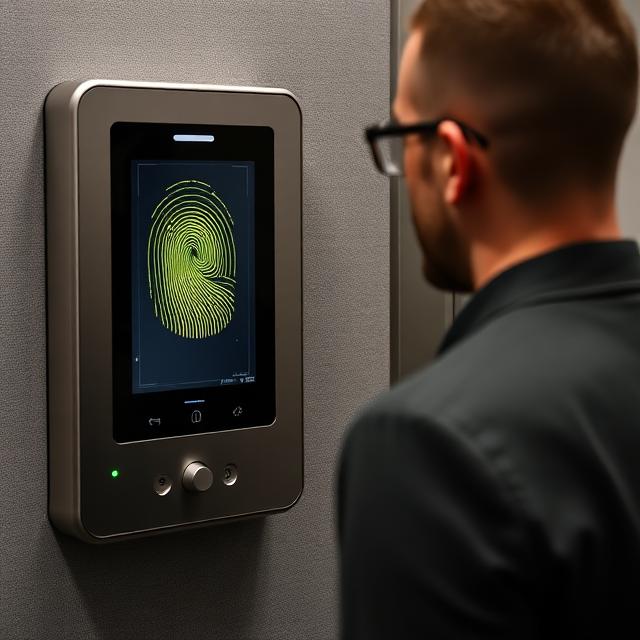
This principle mirrors the evolution of modern physical security.
Just as organisations increasingly use biometric systems, facial recognition and identity-based access controls to verify individuals entering secure facilities, Zero Trust applies the same logic to digital environments.
The question is no longer whether someone is inside the network.
The question is whether they should have access to the specific resource they are attempting to use.
Least Privilege by Design
One of the core principles of Zero Trust is least privilege.
Users should only have access to the systems, applications and information required to perform their role. Nothing more.
This reduces the potential impact of compromised accounts, insider threats and accidental misuse.
If an attacker successfully compromises a user account, their ability to move laterally through the environment becomes significantly restricted. Rather than gaining broad access across an organisation, they are limited by the same permissions that constrained the legitimate user.
In practice, this can dramatically reduce both the likelihood and impact of security incidents.
Continuous Verification
Traditional security models often treated authentication as a one-time event.
A user logged in, access was granted, and the session remained trusted until logout.
Zero Trust operates differently.
Access decisions can be continuously evaluated based on changing circumstances. A user accessing an application from their usual office location may be treated differently from a login attempt originating from another country. A fully managed corporate device may receive broader access than an unmanaged personal device.
Factors such as location, device health, authentication strength, behavioural indicators and risk scoring can all contribute to access decisions.
Security becomes dynamic rather than static.
Beyond Users: Trusting Devices and Systems
Zero Trust extends beyond human users.
Modern organisations rely on countless devices, applications, cloud services, APIs and automated systems that communicate continuously with one another.
Just as users must prove their identity, systems must also establish trust before information is exchanged.
Servers authenticate to services. Applications validate requests. Devices prove compliance with security policies. Automated processes operate within tightly controlled permissions.
The result is a security architecture that assumes compromise is possible and therefore limits unnecessary trust wherever it exists.
Micro-Segmentation and Containment
A key component of many Zero Trust implementations is micro-segmentation.
Rather than treating the internal network as a single trusted environment, systems and resources are divided into smaller security zones with carefully controlled communications between them.
This approach mirrors the compartmentalisation used in high-security physical facilities.
An authorised visitor may gain access to a reception area, but that does not automatically grant access to every room within the building. Similarly, access to one business system should not automatically provide access to all others.
By restricting movement between systems, organisations can contain threats more effectively and reduce the impact of successful compromises.
Zero Trust is a Strategy, Not a Product
One of the most common misconceptions surrounding Zero Trust is the belief that it can be purchased as a standalone solution.
In reality, Zero Trust is an architectural approach that influences how organisations design, deploy and manage technology.
Identity management, multi-factor authentication, endpoint security, network segmentation, privileged access management, monitoring and governance all contribute to a successful Zero Trust strategy.
No single technology delivers Zero Trust on its own.
Success depends upon integrating multiple security controls into a coherent framework that continuously validates trust and enforces appropriate access decisions.
Building Resilience in an Untrusted World
The most important aspect of Zero Trust is its acceptance of reality.
No organisation can guarantee that attackers will never gain access to a network, compromise a device or obtain legitimate credentials. Security strategies based solely on prevention are increasingly difficult to sustain.
Zero Trust acknowledges this by designing systems that remain resilient even when individual controls fail.
Rather than assuming a trusted environment, it assumes that compromise is possible and limits the opportunities available to an attacker at every stage.
In doing so, organisations gain greater visibility, stronger control and a significantly improved ability to protect critical systems, data and operations.
Security Through Verification
Ultimately, Zero Trust represents a shift in mindset.
The focus moves away from location-based trust and towards continuous verification. Every user, every device, every application and every request must establish legitimacy before access is granted.
Whether protecting cloud services, operational technology, critical infrastructure or traditional enterprise environments, the principle remains the same:
Never trust by default. Always verify.
In a world where security perimeters have largely disappeared, that principle is rapidly becoming one of the most important foundations of modern cyber security.